Category: Uncategorized

The Muslim Post
October 12, 2017

Delivered at the United Nations on September 19, 2017

The Prophet Muhammad (pbuh) said, “He who does not thank people does not thank Allah.” So, let me begin by thanking people. To his excellency, President Hassan Rouhani; to the honorable Ambassador Gholamali Khoshroo; to the distinguished Manuchehr Ja-farzadeh: thank you for organizing this meeting with American Muslim leaders and thank you all for attending.

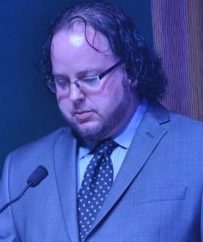
For those who know me, I need no introduction. For those who do not know me, and perhaps should know me, I am Dr. John Andrew Morrow, also known as al-Ustadh al-Duktur Ilyas Islam. I am a western academic and a full professor. I am also a traditionally trained alim.

I am the author of over 30 scholarly books, the most influential of which is The Covenants of the Prophet Muhammad with the Christians of the World, a work that follows in the scholarly footsteps of Dr. Muhammad Hamidullah’s al-Watha’iq, Ayatullah Ahmadi Miyanji’s Makatib al-Rasul, and Zafar Bangash’s Power Manifestations of the Sirah.

Many educated Muslims are familiar with the Covenant of Madinahthe Treaty of Najran, and perhaps, the Ashtinamehthe Covenant of the Prophet Muhammad with the Monks of Mount Sinai, namely, with the Monastery of St. Catherine. These documents, however, merely scratch the surface. There are dozens upon dozens of covenants that the Prophet (pbuh) concluded with the People of the Book.

The principles enshrined in the Covenants of the Prophet Muhammad and Imam ‘Ali (a) are simply astonishing. They are like a Universal Declaration of Islamic Human Rights and an Islamic Bill of Rights dating back to the 7th century. They have both theoretical and practical applications.

The Covenants of the Prophet Muhammad have inspired a movement, the Covenants Initiative, which calls upon all Muslims to respect the rights that the Messenger of Allah (pbuh) granted to the People of the Book.

The Covenants of the Prophet are backed by hundreds of Sunni, Shi‘i, and Sufi scholars. They are backed by al-Azhar. They are backed by the Grand Muftis of the Muslim world.

Imam Khamenei and Ayatullah Araki received copies of this book in 2013. They invited me to meet with them in Iran and to lecture on the Covenants of the Prophet in the Hawzah ‘Ilmiyyah. Unfortunately, due to conflicts in our schedules, I was unable to visit. Since then, I have been invited to Iran on numerous other occasions. Once again, due to my obligations, these trips did not come to pass.

Allah (swt) however, works in wonderful ways. Since 2013, The Covenants of the Prophet Muhammad with the Christians of the World has been translated into Spanish, Italian, and Arabic. The Arabic translation is being published in Beirut, Lebanon, by Dar al-Kutub al-‘Ilmiyyah, under the name ‘Uhud al-Nabi li-Masihiyyi al-‘Alam.

I would like to invite you, Mr. President, as head of government of the Islamic Republic of Iran, to lend your support to the Covenants Initiative, to help disseminate The Covenants of the Prophet, and to stimulate more studies on this critically important subject.

Let us be interfaith ambassadors and not warmongers. Let us extend the olive branch to others as opposed to threaten to blow them off the face of the earth as we just heard someone do.

We are the people of truth. We are the people of justice. And we are the people of love. This is the need of the hour and the issue of the age. Thank you.


Organized by Zachary Markwith, a PhD candidate in Islamic Studies, and supported by various religious and academic centers, the lecture tour included speaking engagements at the IMAN Cultural Center in Los Angeles, Bayan in Claremont, the Islamic Center of Fresno, the Graduate Theological Union in Berkeley, and the Islamic Culture Center of Northern California in Oakland.

Morrow’s positive and uplifting voice was well-received by audiences in southern and northern California. “What a wealth of knowledge!” commented Noor-Malika Chishti, who attended Morrow’s presentation in Los Angeles. Asked what motivated him to organize the week-long series of lectures held at the end of September, Zachary Markwith spoke of the significance of Morrow’s scholarship: “The Covenants of the Prophet Muhammad with the Christians of the World is one of the most important books written in recent decades. It is our duty, as Muslims, to share true Islam with the world.”

October 8, 2017

This is the first of a two-part series and was originally a speech delivered by Dr John Andrew Morrow (Imam Ilyas Islam) at the 13th Annual National Muslim Congress Conference in Dallas, Texas, in the United States of America.


The Message of Love. Could there possibly be a better theme for this conference? The topic is timely, universal, and eternal. To begin, we must begin with the beginning: Allah (swt), the Mighty and Majestic. “God is love,” claim the Christians in theological error. God is not “love” because “love” is a noun, a name used to identify a person, a place or thing. However, God is not a person, a place or a thing. As Imam Ja‘far Al-Sadiq explains, He is only a thing, to bring him out of nothing; a thing like no other thing as all other things are created. [Kulayni & Saduq]

Although God is not Love, God is indeed Loving because “loving” is an adjective, a word or phrase used to describe an attribute. And how do we know God? By means of His Attributes. As we read in the Glorious Quran: “Call upon Allah, or call upon Rahman: by whatever name ye call upon Him, (it is well): for to Him belong the Most Beautiful Names.” [17:110] In Islam, we do not say Allah huwa al-ḥub or “God is Love.” We do, however, say that Allah is al-Wadud, namely, “The Loving One.” As we read in the Glorious Qur’ān: “Verily, My Lord is Merciful and Loving.” [11:90] And yet again: “And He is the Forgiving and the Loving.” [85:14] As Almighty Allah (swt) glorified and exalted be He, states in a sacred saying, in Hadith Qudsi:  “I was a Hidden Treasure and I loved to be known. Therefore, I created the creatures so that I might be known.” [Ibn ‘Arabi, Ibn al-Khaṭib, Mulla Sadra.]

The cosmos is not eternal. Only Allah is Eternal. The cosmos did not come into being by itself. Nothing can not become something. Non-existence does not will itself into existence. A void or vacuum is devoid of agency. As heartbreaking as it may be to self-centered egotistical materialists, we, human beings, were not created for ourselves: we were created for God. Everything in existence was created by God and for God. And everything that exists was created out of Divine Love.

The Hidden Treasure that is God cannot be known without existence or knowledge. Creation is the ultimate act of love. Bringing entities from non-existences into existence is the greatest act of love imaginable. The Arabic word for universe is kawn. It means “existence” or “being.” Allah brought everything into being by way of love so that He could be known.

Human beings were created in the name of Allah. In other words, we are the receptacles in which the names and attributes of God can manifest themselves fully. Human beings are permeated by the original love of the Divine Essence. If is for this reason that human beings are inclined to perfection. As Almighty Allāh explains in the Glorious Quran: “And He taught Adam the names: all of them.” [2:31]. In other words, the Asma’ Allah al-ḥusna, the Most Beautiful Names.

If Divine Love was the cause of creation, and love that brought the world into existence, it is also the law that that governs God’s relationship with creation. As Almighty Allāh decreed upon Creation: “My Mercy prevails over My Wrath.” [Muslim, Bukhari, Ibn Majah, Nasa’i] Mercy and Compassion are manifestations of love. They are the most commonly invoked attributes of the Divinity: Bismillah al-Raḥman al-Raḥim / In the Name of Allāh, the Most Compassionate, the Most Merciful. They derive from the root ‘raham’ which means “womb,” the very symbol of love, mercy, care, affection, safety, security, and compassion.

As Almighty Allah (swt) states in the Glorious Quran: “And I did not create the jinn and humankind except to worship Me.”[51:56]

The verb in question is ‘abada / ya‘budu. It is translated into English as “to worship,” “to serve,” “to submit,” and “to obey.” When we speak of ‘ibadah, we speak of obedience, submission, and devotion to God. ‘Ibadah, in Arabic, is related to words such as ‘ubudiyyah which means servitude and slavery. The meaning that is given to ‘ibadah and ‘ubudiyyah has a profound impact on one’s worldview. Many lay Muslims believe that people exist only to submit to Allāh. In their mind, God is some sort of Divine Dictator who decreed: “Be! Now, obey me or go to hell!” In other words, we are just slaves. That is the nature of the relationship between the Creator and the created. This limited and superficial understanding of Arabic and Islam can have serious consequences: spiritually, psychologically, socially, and politically. Imagine parents who have children for one reason and one reason only: to serve them: “I made you to serve me. Now go do the dishes or I will spank you.” Imagine employers who treat their employees as servants. Imagine husbands who tell their wives: “Obey me or I will slap you.” Imagine political leaders who believe that people should obey them, out of obligation, and out of fear: “You disobey, you die.” Why is the Muslim world full of despots and dictators? Look no further. I am not disputing what the Quran says; I am disputing the misinterpretation of the Quran that is so prevalent among certain Muslims. I seek to increase understand and elevate the discourse on the basis of authoritative Islamic sources: the teachings of the Prophet (peace be upon him), the teachings of the Twelve Imams (as), the teachings of Quranic commentators, the teachings of Muslim theologians, and the teachings of spiritual authorities.

“I did not create the jinn and humankind except to worship, serve, and obey Me.” [51:56] Yes, absolutely, but what is the meaning of ‘ibadah? It is obedience. It is submission. It is servitude. It is devotion. It is humility. But those are the means. What is the goal? Worship for the sake of worship? Servitude for the sake of servitude? Slavery for the sake of slavery? No! The ultimate goal is love for Allah: absolute love for the Loving. As Almighty Allāh says in a Hadith Qudsi: “Oh Son of Adam! Serve me. Verily, I love those who serve Me.” [Shirazi] What does it mean to serve and obey God? What does it mean to worship God? It means, first and foremost, to know God. And how is it that we know God? By knowing ourselves. As the Prophet, peace and blessings of Almighty Allāh be upon him, said: “He who knows himself knows his Lord.” [Ikhwan al-Safa’, Ibn ‘Arabi, al-Sha‘rani, al-Tamimi al-Amudi, Majlisi; see also, Quran 59:19]

Almighty Allah placed potentiality in the souls of humanity. Our souls are mirrors that reflect the Divinity. If we soil our souls, cloud up the mirror, scratch the mirror or crack and shatter the mirror, we will neither see ourselves nor our origin. However, if we purify our souls, clean our mirrors, and shine our mirrors, we will witness God in us and us in God. Or, to put things into simpler terms. As mothers and fathers, we see ourselves in our children. To know God means to remember God. It means to see Allah in all things. Everything in existence is a name of Allah. Everything is a signifier that points to the Signified. The Earth is not inanimate. She is alive. She feels, she communicates, and she speaks. She bears witness against our sins. The Prophet (peace be upon him) used to pick up pebbles, smile, and share their words of divine praise with his Companions. Everything in creation is in constant adoration. As we read in the Glorious Quran: “Do you not see that Allah is exalted by whoever is within the heavens and the earth and [by] the birds with wings spread [in flight]? Each [of them] has known his [means of] prayer and exalting [Him].” [24:41]

Imam Ali Zayn al-‘Abidin evoked “the keepers of the rain, the drivers of the clouds, him at whose driving sound is heard the rolling of thunder, and the reverberating clouds swim before his driving, bolts of lighting-flash, the escorts of snow and hail, the descenders with the drops of rain when they fall, the watchers over the treasuries of the winds, those with the mountains lest they disappear, those whom Thou has taught the weights of the waters, and the measures contained by torrents and masses of rain, the angels who are Thy messengers to the people of the earth with the disliked affliction that comes down.”

The signs of Allah (swt) surround us if only we are sensitive enough to perceive them. As Almighty Allah states in the Glorious Quran: “He will show you His Signs and you will recognize them;” [27:93] “Whoever honours the symbols of Allah — indeed, it is from the piety of hearts, [22:32] and finally, “We will show them Our signs in the horizons and within themselves until it becomes clear to them that it is the truth.” [41:53] The more we witness God, the more we love God. Let me repeat that: The more we witness God, the more we love God. As we read in the Glorious Quran:“Verily, in the remembrance of Allah do hearts find rest.” [13:28] Since the creation is subservient to the Creator, we need to recognize our servitude. There are those who deny God: they are kuffar or unbelievers. There are those who associate partners with God: they are mushrikin or polytheists. To be a Muslim means to submit and surrender to God. The attitude one takes toward God can be one of two: that of the slave, the ‘abd, or that of the servant, the ‘abid. The slave is the one who obeys the Master out of fear. The slave does not steal out of fear of punishment. The servant, however, is the one who seeks the reward of His Master. In other words, the slave fears Hell while the servant yearns for Paradise. Most human beings are slaves whether they recognize it or not and whether they accept it or not. Some human beings are servants. They recognize and accept that they are slaves; however, rather than rebel and disobey, they choose to submit and obey. They are good and diligent servants.

There are, however, believers who are not simple slaves or servants. They escape the servant/slave dichotomy. They are not motivated by fear of punishment or by the yearning for a reward. They are those who seek the pleasure of the Master. They are those who love the Master. They are those who long for the love of the Master. Among this elite, a select few who become close to the Master, like Prophet Ibrahim (peace be upon him), who became Khalilullah, the friend of Allah, the Prophet Muḥammad, who became Habibullah, the Beloved of Allah, and Imam Ali, who became Wali Allah or the Friend of Allah. We all begin as slaves of God. If we hear and we obey, we are good slaves. This is the bare minimum that is required of believers. All Muslims, however, should work on becoming servants of God. Rather than simply avoid damnation, they should actively seek salvation. Some, who grow spiritually, will strive to become ‘arifīn, the knowers of God, and ‘ashiqin, the lovers of God. With persistence, dedication, devotion, study, and piety, there are others who, by the will of God, and the love of God, can become awliyya’ al-salihin, the Friends of God and the Proofs of God for all creation.

Muslims have debated for over a millennium: is God transcendent or is God immanent? The jurists stressed that God was completely and utterly incomprehensible and unknowable. The mystics insisted that God was imminent and that our relationship with Him could be intimate. As always, the teachings of the Twelve Imams (peace be upon them), stress the middle ground: neither one nor the other. God is both transcendent and imminent. In matters of law, God is treated as transcendent. In matters of spirituality, God is treated as imminent. In other words, God is like a stern father and a loving mother.

Muslim theologians, however, avoid using terms such as father or mother when describing the divinity since they denote duality as opposed to divine unity. Although God is neither male nor female, Muslim theologians describe the Divinity in terms of attributes of power and beauty, namely, between feminine and masculine qualities. God, for example, is both Merciful and Wrathful, both Gentle and Severe, and both Beautiful and Majestic. Although a mother is all mercy, explains Rūmī, there is also mercy in the father’s severity for Allah’s mercy prevails over his wrath. In Islam, justice is tempered by love, mercy, and forgiveness.

Dr John Andrew Morrow (Imam Ilyas Islam) is an Amerindian with Canadian and American citizenship. He received his PhD from the University of Toronto in the year 2000. He worked as an Assistant, Associate, and Full Professor of Foreign Languages for over a decade and a half at Park University, Northern State University, Eastern New Mexico University, the University of Virginia, and Ivy Tech Community College. He is the author of over thirty academic books in the fields of Hispanic, Islamic, and Indigenous Studies, including the critically-acclaimed Covenants of the Prophet Muhammad with the Christians of the World. A public figure and activist, he lectures all around the globe and acts as an advisor to world leaders. In recognition of his accomplishments, Dr Morrow received an ISNA Interfaith Achievement Award in 2016.

October 8, 2017

SHAFAQNA – By Dr. John Andrew Morrow (Imam Ilyas Islam)

Delivered at Bayan-Claremont in California on September 26, 2017
The Covenants of the Prophet Muhammad, peace and blessings be upon him, are controversial. These documents, which are found in Muslim, Christian, Jewish, Samaritan, and Zoroastrian sources have elicited a great deal of debate and discussion. All have sought to answer a simple question: are they authentic?

There are many ways to authenticate a document. The first is to track its provenance; its chain of transmission; its chain of custody. The Covenants of the Prophet have been transmitted by hundreds upon hundreds of Muslim, Christian, Jewish, Samaritan, and Zoroastrian authorities, in dozens of different languages, for that past 1400 years. From the point of view of provenance, the Covenants of the Prophet appear to be authentic.

The second way to authenticate a document is by means of physical analysis. The scientific analysis of the paper, the papyrus, or the leather, as well as the ink, and the style of the script. The documents that have survived date from as recently as the 20th century as far back as the 7th century. So, we have, what presume to be, first hand copies, second hand copies, third hand copies, fourth hand copies, and fifth hand copies.

We can confirm, however, that the copies from the early 20th century are identical to the copies made in the 17th century and that the copies made in the 17th century are identical to the copies made in the 7thcentury. We can therefore confirm that the Covenants of the Prophet were transmitted accurately over the course of 1400 years. So, from the point of view of physical analysis, the Covenants of the Prophet appear to be authentic.

The third way to authenticate a document is by content analysis. Do the Covenants of the Prophet agree with the Qur’an? Do the Covenants of the Prophet agree with the authenticated sunnah? Can the Covenants of the Prophet be reconciled with the sirah or biography of the Prophet? Is the language an accurate reflection of the Arabic spoken at the time of the Prophet? The answer to all these questions is yes. So, from the point of view of content analysis, the Covenants of the Prophet appear to be authentic.

The fourth way to authenticate a document is by means of expert opinion. What have scholars said about the Covenants of the Prophet over the course of the past 1400 years. In some cases, opinion is divided. In other cases, most scholars have concluded that the content of the document is genuine. When we look at the dozens of Covenants that the Prophet concluded with different faith communities and denominations, we find that that the weight of scholarly opinion favors a conclusion of authenticity.

Today, we will examine a fifth way of authenticating a document, namely, the rulings of Muslim religious and political authorities throughout the ages. What did the Caliphs, Sultans, and Shahs say about the Covenants of the Prophet? Surprise, surprise: they had a lot to say and their conclusions and commands became the law of the land.

Let us take the case of the Covenant of the Prophet Muhammad with the Armenian Christians. It was authenticated by Caliph ‘Umar. It was authenticated by Imam ‘Ali. And it was authenticated by Salah al-Din. Let us take the Covenant of the Prophet Muhammad with the Christians of Persia. It was authenticated by Imam Ja‘far al-Sadiq. It was authenticated by Shah ‘Abbas, the Safavid leader.

Let us take the Covenant of the Prophet with the Monks of Mount Sinai. It was authenticated by Caliph al-Mu‘izz (953-974 CE), Caliph al-‘Aziz (975-996 CE), Caliph al-Hakim (996-1021 CE), Caliph al-Zahir (1024 CE), Vizier al-Afdal ibn Badr al-Jamali (1094-1121 CE), Caliph al-Hafiz (1134 CE), as well as by the Decree of Shirkuh (1169 CE). It was authenticated by the Ayyubids Caliphs (1195, 1199, 1201/02, and 1210/11 CE), by the Mamluk Decrees (1259, 1260, 1272, 1268/69, 1280 and 1516 CE), and by all the Ottoman Sultans from 1519 all the way to 1904.

If the Caliphs, Imams, Sultans, and Shahs, from the 7th century to the 20th century stated that the Covenants of the Prophet are authentic, then whom am I to argue otherwise. I take refuge in Allah from having the audacity and the insolence to believe that I know better than all the Caliphs, Imams, Sultans, and Shahs of Islam.

Since there are literally hundreds of firmans from the political leaders of Islam, and thousands of fatawa or edicts by the religious leaders of Islam, it would take me days to read them all to you and weeks to expound upon them. I will therefore limit myself to a short survey of imperial edicts from the rulers of the Muslim world that clearly confirm and renew the rights and protections that the Prophet Muhammad, peace and blessings be upon him, provided to the People of the Book.

The first of the edicts that is I would like to quote was authored by Abu Muhammad ‘Abd Allah ibn Yusuf ibn al-Hafiz (1149–1171), known as al-ʿAdid li-Din Allah, the fourteenth and final of the Fatimid Caliphs. The original document, which measures ten meters long, reads as follows:

Praise be to Allah, Lord of the Worlds. In the Name of Allah, the Most Compassionate, the Most Merciful. This edict was issued by our most noble leader, the supporter of Allah’s religion, and the Leader of the Believers… May the blessings of Allah’s be upon him, his virtuous ancestors, and his noble progeny…
 
The Bishop of the Monastery of Mount Sinai and its monks, who live a life of seclusion and prayer, presented a petition in our presence with the habitual signatures. They have signed decrees from the days of al-Hakim and other records that they are honored to have received from these sublime ‘Alawite states.

The monks asked us to renew the privileges that they currently have. We ordered that this edict care for them, protect them, and make matters easy for them. We ordered that they be treated as befits their customs and that they be hosted well.
 
They should be helped so that they can manage their affairs well. They should be made hopeful and happy. They are to be protected wherever they are in the [Fatimid] State. And they should be helped to benefit from its bounties.
 
The monks should be relieved of what governors asked them to pay in taxes…. The Arabs are forbidden from entering the residences of the monks and robbing them from the savings they use to host pilgrims. The monks should be exempted from taxes and duties in accordance with the decrees of the Prophet that they have in their possession and which prohibit all attempts to change or alter the privileges in question or prevent them from being implemented. The friends of the monks, and all those who work for them, must be protected. The same applies to those who gather money from them, be it tithe or alms.

No harm should come to those who secure sustenance for them whether they are in Egypt, nearby countries or the rural areas. What is more, all taxes that were recently imposed on them must be dropped.
 
Anyone who reads or hears this decree — including leaders who oversee war in the east, may Allah support them, or those in charge of fortresses on Mount Sinai, may Allah keep them strong, and all the deputies and clerks — should abide by it, pay attention to its clauses, and be careful not to transgress it…. Written in Jumada II in 564 AH, March 1169 CE.

The decree of Abu Muhammad ‘Abd Allah confirms that the Sinai monks regularly requested the renewal of their privileges. It establishes that the monks had received decrees granting them rights and freedoms that dated back to the time of al-Hakim (996-1021 CE), the sixth Fatimid Caliph.

Not only were their ancient privileges renewed, Abu Muhammad ‘Abd Allah issued a long list of caring and compassionate commands that radiate love. His decree covers all the major points found in the Sinai Covenant; however, rather that focus on the letter, he stresses its spirit that is rooted in the Golden Rule. And like the Covenant of the Prophet, the decree of the last Fatimid Caliph warns against violating the rights of Christian contemplatives.

The second document that I wish to share with you this evening is the Decree that Sultan Selim I granted to the Monks of Mount Sinai in 1517. Remember, this is the Sultan who brought the Ashtinameh, the Covenant of the Prophet Muhammad with the Monks of Mount Sinai, back to the Chamber of Relics in the palace of Topkapi in Istanbul. It reads:

Since the monks of Mount Sinai have come to our sublime Divan, and have humbly represented that Muhammad al-Mustafa, peace and blessings be upon him, being heretofore by their Monastery hospitably received in his travels, and according to their slender abilities, adorned with all kinds of honor and reverence, graciously exempting this community of Christian monks from their annual tribute, and in confirmation of it was pleased to give a holy writing signed with his own hand [print], after his example, we also, out of our great clemency, do ordain that the aforementioned monks be free from the yearly tribute paid by the rest, and to suffer without molestation to enjoy their churches and rites according to their obsolete law.
 
To this end, we have graciously ordered them an authentic copy of the Covenant of God’s Holy Prophet, confirmed by our inscription. We therefore enjoin every person exercising dominion or jurisdiction throughout our whole kingdom, not to burden the said monks of the tribe of Jesus with tribute or other political contributions. And whosoever shall act contrary to our noble decree and mandate, know that he shall be certainly punished and chastised. Given in Cairo…

Sultan Selim, the Grand Vizier, the Chief Mufti, and all the leading Muslim scholars at the service of the Ottoman Empire examined and authenticated the Sinai Covenant. They were not of the ignorant.

The third decree that I would like to cite was issued by Sultan Mustafa I (1591-1639), who ruled from 1617-1618 and from 1622 to 1623, and directed to Bishop Ghafril the Fourth in 1618 CE. It proclaims:

To the greatest judges of the states of Rumelia, Anatolia, and Egypt, the Protected. To the greatest judges of Damascus in Syria, the city that smells like Paradise. To the greatest judges of Baghdad, the city that looks like Paradise. To the judges and their deputies. To all those in charge of money. To the military commanders. To the customs directors and the port directors. To the distinguished members of the Secretariat and to all men of authority. May Allah empower them.
 
When this royal decree of mine arrives, it should be known that Pastor Ghafril IV, Bishop of Mount Sinai, based in that blessed mountain since days of old, presented to our highness a signed petition.

In the petition in question, he asks us for a sacred decree in accordance with the records and deeds in the hands of the monks of the Monastery of Mount Sinai as well as the text of the Sacred Covenant which was offered to the monks in question by the Greatest of the Prophets, Muhammad. He granted the monks this document after they met with him and accepted the terms that apply to non-Muslims. This event took place when the Prophet was passing through the sacred wilderness on a visit to the Cave of Moses, peace be upon him, along with other noble pilgrims that he was taking to Mount Sinai.
 
Based on the generous privileges provided to them by the Caliphs, may the blessings of Allah be upon them all, and by the previous Sultans, the protectors of religion. Based on the content of these decrees, records, and explanations preserved in the Royal Book. Based on the Sacred Covenant (of the Prophet) [mu‘ahadah muqqadisah] preserved by the two monasteries on the Mount of Moses, peace be upon him, and Mount Sinai since the Days of Ignorance, no military leader, nor any man of authority, should attack the monks, pastors or citizens of the two monasteries in question.

They are not to be attacked during their travels to Rumelia and Anatolia, to Egypt and Damascus, to the Mediterranean and Black Sea destinations, or to any cities and rural areas in Islamic States. They are not to be attacked while they are performing their religious rituals nor are they to be attacked when traveling to gather alms from Christians to feed and clothe the ascetics who live in the two monasteries in question and who feed the foreigners who perform pilgrimage to their monastery.
 
The monks of the monasteries in question are not to pay taxes or customs on their personal income or belongings in any place. Hence, when a monk passes away, neither the Secretariat nor any clerk in charge of dividing estates shall interfere with the property and belongings that were left behind by the deceased. This is because the property of deceased monks goes to the monks who are still alive…

Similarly, the monks of these two monasteries have the right to own property by means of endowment to their monasteries, churches, farms, hostels, residences, fields, groves, and orchards, as well as their lands and winter pastures in Rumelia and Anatolia, their churches and palm orchards along the seaside (in the city of al-Tur), such as the monasteries and properties endowed in the Jawanyah District at Bab al-Nasr in the capital of Egypt, their orchards, plots of land, and winter pastures in Alexandria and Rashid, as well as those found in any other ports, regions, directorates, cities, and rural areas.

The monks also have the right to own property. This includes lands that they themselves purchased as well as lands that were endowed or given to them by other Christians. The monks are not to be prevented from using their lands in any place and no taxes or fines are to be imposed on them, either by the directors of the Directorates, by their agents, by the supervisors of the Sultan’s endowments, by collectors of money, by the revenue officers, by the agents of the Secretariat, by the collectors of personal tribute, by tax inspectors, or by military and royal clerks and their agents…

No Patriarch or Bishop has the right, in any region or Directorate, to intervene with the affairs of the monks [from Mount Sinai] or terrorize them as these are the rights of their elected Archbishop. No one has the right to trouble them or treat them in any way that is contrary to the Sacred Covenant (of the Prophet) or the Decrees of the Sultans…
 
I have issued my order to you so that you can abide by the sublime orders that emanate from our illustrious ancestors along with my venerable order while avoiding anything and everything that might go against it… Be aware of that and place your trust in my sacred decree. Written on the 11th day of Safar in 1027 AH, April 7th, 1618 CE.

As Sultan Mustafa I indicates in his decree, the delegation of monks from Mount Sinai did not simply provide the proclamations of previous rulers to support their petition: they also provided a copy of the Covenant of the Prophet. This is precisely what we can expect was done when the monks approached Fatimid rulers and those who preceded them. Not only did Sultan Mustafa I acknowledge the authenticity of the Covenant of the Prophet, he confirmed the historical account of its granting.

If some scholars claim that there is no record of the Sinai Covenant and the events surrounding its granting in Muslim sources, they are in evident error. The decrees of Caliphs and Sultans are Islamic sources. According to most accounts, the Covenant of the Prophet was provided to the monks in pre-Islamic times when Muhammad traveled as a young merchant. He is said to have worked as a caravan leader for the monks. If this is the case, he was bringing pilgrims to the Monastery of St. Catherine.

There is also another account, lesser known than the former, that is quoted by Nektarios of Sinai (269-271). According to his sources, Muhammad’s pilgrimage to Mount Sinai took place during his prophethood. A delegation of monks from Mount Sinai had gone to Madinah to seek privileges from the Prophet. After he granted them what they had requested, they invited him to return with them to see the holy sites. This took place during the second year of the hijrah.

The account transmitted by Nektarios of Sinai appears to be echoed by Jeanne Aubert. According to her, the Covenant of the Prophet was granted in the second year of the hijrah. A battle took place between Muslims and Christians in which many of the latter lost their lives. News of the death-toll spread throughout the Middle East resulting in numerous delegations of Christians, Jews, Zoroastrians, and Sabeans arriving in Madinah to offer their submission to the powerful new prophet.

Although the decree of Sultan Mustafa I does not indicate when Muhammad performed a pilgrimage to St. Catherine’s Monastery to visit the Cave of Moses, it does confirm that the event took place. As for the prophetic privileges themselves, Sultan Mustafa I did not simply repeat them: he interpreted and applied them in the most specific fashion.
The fourth and final decree that I would like to share with you was issued by Sultan ‘Abd al-Hamid II (1842-1918) to the Bishop Burvirius II who was the Bishop of Mount Sinai in 1904. The edict of the last Caliph and Sultan of Islam reads:

The Ottoman Tughrah: “The Conqueror ‘Abd al-Hamid ibn ‘Abd al-Majid Khan, may he be victorious forever.”
 
The Egyptian Khedive informed us that His Holiness Burvirius, the Archbishop of the Monastery of Mount Sinai, has retired because his age and illness and that the monks from the monastery met and elected His Holiness Burvirius Yougotis in his place.
 
The Egyptian Khedive asked us to issue a decree accepting his election and appointing the said person as the archbishop according to established rules. The regulations were reviewed and it was found that electing ecclesiastic rulers was one of the rights that was given to the monks. It is for this reason that we issue this Sultanic decree appointing His Honor Burvirius Yougotis as the Archbishop of the Monastery of Mount Sinai.
 
We order that no one interfere with their monasteries, churches, and orchards in the sacred Mountain of Moses and Mount Sinai; their church, palm orchards and olive orchards that are located along the seaside in the town of al-Tur); their monastery in the inner district at Bab al-Nasr in Egypt, the Protected; the two agencies on the right side of the mentioned district and its north; the church on the side of St. Catherine; their places of prayer and worship; their residences and agencies; as well as the other places of their endowments in Cairo. No law enforcement agents should enter their shops or stand in their way.
 
No fees should be charged from their orchards, their fig and fruit trees, as well as their palm and olive groves. The same applies to what they store in the city of al-Tur, in Syria, as well as in Egypt.
 
No one should stand in their way in their silk trade, their endowments, as well as their trees and farms in Cyprus. They should not be asked to pay customs and entrance fees in the ports of the Red Sea, the Western Sea in Alexandria, Rashid, Demiat, Cyprus, Damascus in Syria, Nadis, Hauran, Qistah, Ghazzah, Beirut, Seida, Tripoli in Syria, Latakia, and other ports. Customs should not be paid on soap, oil, grain, offerings, and alms coming from Islamic lands.
 
They have the right to visit their cemetery in Damascus, in Syria, according to their traditions. No one should stand in their way of burying their dead. No one should interfere with their graveyards.
 
The governors should fulfil their obligations [towards the monks] immediately and completely. They should prevent people from interfering with the rights [of the monks]. No judge, governor, trustee or civil servant should interfere with matters pertaining to the monks.
 
No Alexandrian Patriarch or any other Patriarchs of other denominations should treat them badly nor should they interfere with their matters in any way. They are free under the rule of their Patriarch.
 
Since our Prophet Muhammad, the Messenger of Allah, gave the monks a blessed Covenant and considering that the Caliphs and the Sultans followed his honorable example by venerating his Covenant and his respect for the shari‘ah, they are to live in the mountain in question in complete security and equanimity. In accordance with the Covenant of the Prophet, the honorable decrees and obligatory orders [of the Caliphs and the Sultans], no one is permitted to attack or harm the monks.
 
Anyone who fails to respect the Covenant of the Prophet and the orders that have been given deserves a severe punishment. It is for this reason that I gave my orders to them to follow. Written on 15th of Ramadan al-Mubarak in 1322 AH, November 22nd, 1904 CE.

Although the purpose of the decree in question was the appointment of Burvirius II as the Archbishop of Mount Sinai, it was also an opportunity to renew the Sinai Covenant. Consequently, Sultan ‘Abd al-Hamid II confirmed the historicity of the Covenant of the Prophet and acknowledged that the rights of the monks were confirmed in writing by the previous Sultans and Caliphs. Anyone who claims to believe in the Caliphate is therefore obliged to abide by the commands of the Caliphs. As for those who oppose the Covenants of the Prophet, violate them, deny them or disregard them, they have made a mockery of their religion, have insulted the Prophet, and have defied his religious and political successors. And Allah is the Best of Judges.

7 de octubre de 2017

SHAFAQNA

Por: Dr. John Andrew Morrow

Discurso Pronunciado el 26 de Setiembre de 2017 en la Escuela Islámica de Estudios Superiores Bayan-Claremont ubicada en California (EEUU)

Los pactos del Profeta Muhammad ―la paz y las bendiciones sean con él― son polémicos. Estos documentos, que se encuentran en fuentes musulmanas, cristianas, judías, samaritanas y zoroastrianas, han suscitado un gran debate y discusión. Siempre se ha buscado responder una pregunta sencilla: ¿son auténticos?

Hay muchas maneras de autenticar un documento. La primera es rastrear su procedencia, su cadena de transmisión, su cadena de custodia. Los Pactos del Profeta han sido transmitidos durante 1400 años por cientos y cientos de autoridades musulmanes, cristianas, judías, samaritanas y zoroastrianas, en docenas de idiomas diferentes. Desde el punto de vista de la procedencia, los Pactos del Profeta se presentan auténticos.

La segunda manera de autenticar un documento es por medio de análisis físicos. Estos se realizan en el papel, el papiro, el cuero y la tinta usados y sobre el estilo de escritura. Entre los documentos que han sobrevivido, los más nuevos son del siglo XX y los más antiguos del siglo VII. Es decir, tendríamos copias de primera mano, de segunda mano, de tercera mano, de cuarta mano y de quinta mano.

Podemos afirmar que los ejemplares de principios del siglo XX son idénticos a las copias realizadas en el siglo XVII y que las copias realizadas en el siglo XVII son idénticas a las copias realizadas en el siglo VII. Por lo tanto podemos afirmar que los Pactos del Profeta fueron transmitidos con precisión a lo largo de 1400 años. Así, desde el punto de vista del análisis físico, los pactos del Profeta se presentan auténticos.

La tercera forma de autenticar un documento es analizando su contenido. ¿Concuerdan con el Corán? ¿Concuerdan con la sunnah autenticada? ¿Se ajustan a la sirah o biografía del Profeta? ¿Su lenguaje tiene que ver con el existente en la época del Profeta? La respuesta a todas estas preguntas es “sí”. Por lo tanto, en función del análisis de sus contenidos, los Pactos del Profeta se presentan auténticos.

La cuarta forma de autenticar un documento es por medio del dictamen pericial. ¿Qué han dicho los estudiosos sobre estos Pactos a lo largo de 1400 años? A veces la opinión está dividida y en la mayoría de los casos se coincide en su autenticidad. El hecho de que el Profeta concluyese docenas de Pactos con denominaciones y comunidades de fe diferentes, aporta a la conclusión académica de que son genuinos.

Hoy examinaremos una quinta forma de autenticar un documento. Es decir, los criterios de las autoridades religiosas y políticas musulmanas a través del tiempo. ¿Qué dicen los califas, sultanes, y reyes acerca de los Pactos del Profeta? Muy sorprendente: tenían mucho que decir y sus conclusiones y mandamientos se convirtieron en ley.

Tomemos el caso del Pacto del Profeta Muhammad con los cristianos armenios. Fue autenticado por el califa Omar. Fue autenticado por el Imam Ali. Y fue autenticado por Salah al-Din. Tomemos el Pacto del Profeta Muhammad con los cristianos de Persia. Fue autenticado por el Imam Ja’far al-Sadiq y por Shah ‘Abbas, el primer líder safávida.

Tomemos el Pacto del Profeta con los monjes del Monte Sinaí. Fue autenticado por el califa al-Mu’izz (953-974 C.), por el califa al-‘Aziz (975-996 C.), por el califa al-Hakim (996-1021 C.), por el califa al-Zahir (1024 C.), por el visir al-Afdal ibn Badr al-Jamali (1094-1121 C.), por el califa al-Hafiz (1134 C.), por el Decreto de Shirkuh (1169 C.), por los califas ayúbidas (1195, 1199, 1201/02 y 1210/11 C.), por los Decretos Mamelucos (1259, 1260, 1272, 1268/69, 1280 y 1516 CE) y por todos los sultanes Otomanos desde 1519 hasta 1904.

Si los califas, imames, sultanes y reyes de los siglos VII al XX declararon que los Pactos del Profeta eran auténticos, entonces quien soy yo para sostener lo contrario. Me refugio en Dios para no caer en la osadía e insolencia de creerme superior a esos califas, imames, sultanes y reyes del Islam.

Puesto que hay literalmente cientos de “firmans” (órdenes o decretos) de los líderes políticos del Islam y miles de “fatawas” o edictos de los líderes religiosos del Islam, me llevaría días leerlos y semanas hablar a ustedes respecto a sus contenidos. Por lo tanto me limitaré a una breve exposición sobre esos edictos imperiales de los gobernantes del mundo musulmán que claramente confirman y renuevan los derechos y protecciones que concedió el Profeta Muhammad ―la paz y las bendiciones sean con él― al Pueblo del Libro (judíos y cristianos).

El primero que quiero citarles fue escrito por Abu Muhammad ‘Abd Allah ibn Yusuf ibn al-Hafiz (1160 – 1171 C.), conocido como al-Adid li-Din Allah, decimocuarto y último califa fatimita. El documento original, que mide diez metros de largo, dice lo siguiente:

Alabado sea Dios, Señor de los Mundos. En el nombre de Dios, el Más Compasivo, el Más  Misericordioso. Este edicto fue emitido por nuestro líder más noble, el protector de la religión de Dios y líder de los creyentes… Que las bendiciones de Dios sean con él, sus antepasados virtuosos y su progenie noble…

El Obispo del Monasterio del Monte Sinaí y sus monjes ―quienes viven una vida de recogimiento y oración― nos presentaron una petición con las firmas habituales. (Expusieron) los decretos de la época de al-Hakim y otros registros cuya posesión les honra, entregados por esos sublimes estados Alauitas.

Los monjes nos pidieron renovar los privilegios que actualmente tienen. Dejamos constancia que este edicto los protege, ampara y facilita sus cosas. Dispusimos que sean tratados de manera que se respeten sus costumbres y que se los atienda bien.
Deben ser ayudados para que puedan administrar sus asuntos sin problemas. Debe alentárseles y hacerlos sentir felices. Deben ser protegidos dondequiera que se encuentren en el estado [fatimita]. Y se los debe ayudar para que obtengan beneficios de las bondades (de nuestras tierras).

Los monjes quedan exentos de los impuestos gubernamentales… Los árabes tienen prohibido entrar en las residencias de los monjes y robarles sus ahorros, utilizados para albergar a los peregrinos. Los monjes quedan liberados de pagar impuestos y derechos, como lo señalan los decretos del Profeta que tienen en su posesión. Esos decretos también prohíben todo intento de cambiar o alterar los privilegios en cuestión o que se intente que no sean implementados. Los amigos de los monjes y todos los que trabajan para ellos, deben ser protegidos. Lo mismo se aplica respecto a esos que obtienen dinero de ellos, ya sea diezmo o limosna.

Nadie debería dañar a quienes garantizan su sustento, ya sea en Egipto, en los países vecinos o en las zonas rurales. Más aún, deben descartarse todas las gabelas recientemente impuestas.

Cualquier persona que lea o se entere de este decreto ―incluidos los líderes que supervisan la guerra en el este –quiera Dios respaldarlos– o los responsables de las fortalezas en el Monte Sinaí –que Dios los mantenga vigorosos– y todos los representantes y secretarios― debe regirse por él, prestar atención a sus cláusulas y tener cuidado de no transgredirlo… Escrito en Yumada II en 564 AH, Marzo de 1169 C.

El edicto de Abu Muhammad ‘Abd Allah confirma que los monjes del Sinaí solicitaban regularmente la renovación de sus privilegios y establece que habían recibido decretos otorgándoles los derechos y libertades que se remontan a la época de al-Hakim (996-1021 C.), el sexto califa fatimita.

No solo fueron renovados sus antiguos privilegios sino que Abu Muhammad ‘Abd Allah emitió una larga lista de órdenes cariñosas y compasivas que irradian amor. Su decreto abarca todos los puntos principales encontrados en el Pacto de Sinaí. Sin embargo, más que centrarse en la letra, lo hace en el espíritu, arraigado en la Regla de Oro (Nota del traductor: dicha Regla expresa: «Desea para los demás lo que deseas para ti»). Al igual que el Pacto del Profeta, el decreto del último califa fatimita advierte que no se deben violar los derechos de los cristianos contemplativos.

El segundo documento que deseo compartir con ustedes esta noche es el Decreto que el Sultán Selim concedió a los monjes del Monte Sinaí en 1517. Recuerden que este es el sultán que llevó el “Ashtinameh” (el Pacto del Profeta Muhammad con los monjes del Monte Sinaí) a la cámara de las reliquias en el Palacio de Topkapi en Estambul. Allí se lee:

Puesto que los monjes del Monte Sinaí han llegado a nuestro sublime Diván (Consejo Imperial) y humildemente han declarado que Muhammad al-Mustafá ―la paz y las bendiciones sean con él― fue en aquella época recibido con hospitalidad en su monasterio donde se le brindó las mejores atenciones que podían; (puesto que debido a ello) se eximió graciosamente a esa comunidad de monjes cristianos del tributo anual; (puesto que debido a ello) y en confirmación de esa medida (Muhammad) les dio un santo escrito firmado con su propia mano [es decir, aplicó toda su mano entintada como firma], nosotros también, independientemente de nuestra gran clemencia, ordenamos que los monjes ya mencionados queden libres del tributo anual pagado por el resto y disfruten de sus iglesias y ritos según su legislación obsoleta.

En función de ello les dejamos una copia auténtica del Pacto del Santo Profeta de Dios, matriculada por nosotros. Por lo tanto, prohibimos a lo largo de todo nuestro reino que alguien ejerza dominio o jurisdicción sobre dichos monjes, (quienes están) libres de todo tributo o contribución política. Y quienquiera que actuara en contra de nuestro noble decreto y mandato, sabrá que seguramente será sancionado y castigado. Dado en el Cairo…

El Sultán Selim, el Gran Visir, el Mufti principal y todos los importantes eruditos musulmanes al servicio del imperio del otomano examinaron y autenticaron el Pacto del Sinaí. Y ellos no eran ignorantes.

El tercer decreto que me gustaría citar fue emitido por el sultán Mustafá I (1591-1639 C.), quien gobernó entre 1617-1618 y 1622-1623. Este documento fue dirigida al Obispo Ghafril Cuarto en 1618 C. Proclama:

A los principales jueces de los estados de Rumelia, Anatolia y Egipto, el Protegido. A los principales jueces de Damasco en Siria, la ciudad que huele al Paraíso. A los principales jueces de Bagdad, la ciudad que se parece al Paraíso. A los magistrados y sus secretarios. A todos los responsables del dinero. A los comandantes militares. A los directores de aduanas y a los administradores del puerto. A los distinguidos miembros de la Secretaría y a todos los hombres de autoridad. Quiera Dios concederles las capacidades (pertinentes).

Cuando les llegue este decreto mío, es necesario que sepan que el Pastor Ghafril IV, Obispo del Monte Sinaí, ubicado en esa Montaña bendita desde hace mucho tiempo, presentó a nuestra Alteza una petición (debidamente) rubricada.

En la misma nos pide un decreto sagrado conforme a los registros y escrituras en posesión de los monjes del monasterio del Monte Sinaí y conforme al texto del Pacto Sagrado que les fue ofrecido por el más grande de lo Profetas, Muhammad. Él concedió a los monjes este documento después de una reunión y que ellos hubiesen aceptados los términos que se aplican a los no musulmanes. Este evento ocurrió cuando el Profeta transitaba por el desierto sagrado en una visita a la Cueva de Moisés ―la paz sea con él― junto con otros nobles peregrinos, a los que llevaba al Monte de Sinaí.

En base a los privilegios generosos proporcionados a ellos por los califas ―las bendiciones de Dios sean sobre todos ellos― y por los sultanes anteriores, los protectores de la religión; en base al contenido de dichos decretos, registros y explicaciones preservadas en el Libro Real; en base al Pacto Sagrado (del Profeta) [mu’ahadah muqqadisah] preservado por los dos monasterios, en el Monte de Moisés ―la paz sea con él― y en el Monte Sinaí desde los Días de la Ignorancia, ningún jefe militar u hombre de autoridad debe atacar a los monjes, pastores o ciudadanos de los dos monasterios en cuestión.

(Los monjes) No deben ser atacados durante sus viajes a Rumelia, Anatolia, Egipto, Damasco, a los destinos del Mediterráneo y Mar Negro o a las ciudades y zonas rurales de los Estados islámicos. No deben ser atacados mientras realizan sus rituales religiosos ni cuando viajan para recoger limosnas de los cristianos con el objeto de alimentar y vestir a los ascetas que viven en los dos monasterios en cuestión, monasterios en donde se alimenta a los extranjeros que peregrinan allí.

Los monjes de los monasterios en cuestión no deben pagar impuestos o derechos de aduana por sus consumos o pertenencias en ningún lugar. Por lo tanto, cuando un monje fallezca, ni la Secretaría ni ningún funcionario encargado de las sucesiones se inmiscuirá en lo relativo a las propiedades y pertenencias del fallecido. Esto es así porque la propiedad de los monjes difuntos pasa a los monjes con vida…

Del mismo modo, los monjes de estos dos monasterios tienen el derecho a la propiedad de los fondos legados a sus monasterios, iglesias, granjas, hostales, residencias, campos, bosques y huertos, así como a sus tierras y pasturas de invierno en Rumelia y Anatolia, sus iglesias y los huertos de palmeras a lo largo de la costa (en la ciudad de al-Tur).

Asimismo les pertenecen los monasterios y propiedades recibidos en donación en el distrito de Jawanyah en Bab al-Nasr, en la capital de Egipto. De la misma manera les pertenecen sus huertos, parcelas de tierra y pastura de invierno en Alejandría y Rashid, así como lo que posean en otros puertos, regiones, direcciones, ciudades y zonas rurales.

Los monjes también tienen el derecho a la propiedad. Se incluyen tierras que hayan comprado y las que fueron legadas o dadas por otros cristianos. No se debe impedir a los monjes el uso de sus tierras en ninguna parte y ninguno de los funcionarios del sultán, recaudadores o no,  debe cobrarles impuestos o multas…

Ningún Patriarca u Obispo tiene derecho, en cualquier región o lugar, a intervenir en los asuntos de los monjes [del Monte Sinaí] o atemorizarlos, pues estos son derechos de sus Arzobispos electos. Nadie está facultado para tratarlos de forma contraria a lo que estipula el Pacto Sagrado (del Profeta) o los Decretos de los sultanes…

Yo he emitido a ustedes este mandato para que acaten las órdenes sublimes emanadas de nuestros ilustres antepasados y eviten todo lo que podría contradecir estas disposiciones… Sean conscientes de ello y confíen en mi decreto sagrado. Escrito el día 11 de Safar de 1027 H. ; 07 de abril de 1618 C.

Como indica en su decreto el Sultán Mustafá I, la delegación de los monjes del Monte Sinaí, en función de su petición, no proporcionaron simplemente los documentos de los gobernantes anteriores sino que también proporcionaron una copia del Pacto del Profeta. Entendemos que, precisamente, es esto lo que sucedió al presentarse los monjes ante los gobernantes fatimíes y ante aquellos que les precedieron. El sultán Mustafá I no solo reconoce la autenticidad del Pacto del Profeta sino que confirma el relato histórico de su concesión.

Si algunos eruditos afirman que en las fuentes musulmanas no existe registro del Pacto del Sinaí y de los acontecimientos que rodearon su concesión, están evidentemente equivocados. Los decretos de los califas y sultanes están en fuentes islámicas. Según la mayoría de los relatos, el Pacto del Profeta estuvo a disposición de los monjes en la época preislámica. Es decir, cuando Muhammad viajó en su juventud siendo un comerciante. Se dice que cumplió el papel de líder de la caravana de los monjes. Si este fuese el caso, llevaba a peregrinos al Monasterio de Santa Catalina.

También hay otro relato, menos conocido que el anterior, relatado por Nektarios de Sinaí (269-271 C.). Según sus fuentes, la peregrinación de Muhammad al Monte Sinaí tuvo lugar durante su misión profética. Una delegación de monjes del Monte Sinaí había ido a Medina para que el Profeta les conceda seguridad y amparo. Después que les concedió lo que  pedían, los monjes invitaron a Muhammad a ir con ellos para ver los lugares sagrados. Esto ocurrió durante el segundo año de la Hégira.

Parece que Jeanne Aubert se hizo eco del relato de Nektarios de Sinaí. Según ella, el Pacto del Profeta fue concedido en el segundo año de la Hégira. Hubo una batalla entre musulmanes y cristianos en la que muchos de estos últimos perdieron la vida. La noticia de las pérdidas se esparcieron por todo el Oriente Medio y numerosas delegaciones de cristianos, judíos, zoroastrianos y sabeos fueron a Medina para ofrecer su sumisión al nuevo profeta poderoso.

Si bien el decreto del sultán Mustafá I no indica cuándo realizó Muhammad una peregrinación al Monasterio de Santa Catalina para visitar la Cueva de Moisés, confirma que el evento tuvo lugar. En cuanto a los privilegios concedidos, el Sultán Mustafá I no hizo una copia mecánica de los anteriores sino que los analizó y otorgó según las nuevas necesidades y coyuntura.

El cuarto y último decreto que me gustaría compartir con ustedes se trata del emitido por el Sultán ‘Abd al-Hamid II (1842-1918 C.) al obispo Burvirius del Monte Sinaí en 1904. En el  mismo se lee:

(Dice) el sello  otomano: “Quiera el Conquistador ‘Abd al-Hamid ibn ‘Abd al-Majid Khan ser victorioso para siempre”.

El Khedive (virrey) egipcio nos informó que Su Santidad Burvirius, Arzobispo del Monasterio del Monte Sinaí, se ha retirado debido a su edad y enfermedad y que los monjes del monasterio se reunieron y eligieron en su lugar a Su Santidad Burvirius Yougotis.

El Khedive egipcio nos pidió emitir un decreto aceptando esa elección y el nombramiento de la persona mencionada como arzobispo según las normas establecidas. Las regulaciones fueron revisadas y se encontró que elegir gobernantes eclesiásticos fue uno de los derechos que se concedió a los monjes. Es por ello que emitimos este Decreto Real que establece que el Venerable Burvirius Yougotis es el Arzobispo del Monasterio del Monte Sinaí.

Ordenamos que nadie interfiera en sus monasterios, iglesias y huertos en la sagrada Montaña de Moisés y Monte Sinaí; en sus iglesias, huertos de palmeras y olivos que se encuentran a lo largo de la orilla del mar en la ciudad (de al-Tur); en su monasterio en el distrito interno en Bab al-Nasr en Egipto, el Protegido; en sus dos instituciones en el lado derecho del mencionado distrito y el norte; en su iglesia al costado de Santa Catalina; en sus lugares de oración y culto; en sus residencias y organismos; en sus otras posesiones en el Cairo. Ningún funcionario de la justicia debe entrar en sus tiendas o interponerse en su camino.

No debe cobrarse ningún arancel por sus huertos, higueras, árboles frutales y plantaciones de palma y oliva. Tampoco a lo que almacenan en la ciudad de al-Tur, en Siria y en Egipto.

Nadie debe molestarlos en su negocio de la seda, en sus posesiones y en sus bosques o  granjas en Chipre. No se les debe cobrar derechos de aduana y tarifas de entrada en los puertos del Mar Rojo, el Mar Occidental ―Alejandría, Demiat, Chipre, Rashid―, Damasco en Siria, Nadis, Hauran, Qistah, Ghazzah, Beirut, Seida, Trípoli de Siria, Latakia y otros puertos. (Tampoco) debe cobrárseles aranceles por el jabón, aceite, granos, ofrendas y limosnas provenientes de tierras islámicas.

Tienen derecho a visitar su cementerio en Damasco, en Siria, según sus tradiciones. Nadie debe interferir ante el procedimiento de entierro de sus muertos. Nadie debe interferir en sus cementerios.

Los gobernadores deben cumplir sus obligaciones [para con los monjes] de manera inmediata y plena. Deben impedir que la gente perturbe los derechos [de los monjes]. Ningún juez, gobernador, administrador o funcionario debe entrometerse en las cuestiones propias de los monjes.

Ningún Patriarca Alejandrino o de cualquier otra denominación debe tratarlos mal ni meterse en sus asuntos de ninguna manera. (Los monjes) son libres bajo el gobierno de su Patriarca.

Puesto que nuestro Profeta Muhammad, el Mensajero de Dios, dio a los monjes un Pacto bendito y teniendo en cuenta que los califas y sultanes siguieron su ejemplo honorable por medio de venerar su pacto y su respeto por la Sharíah, (los monjes) deben vivir en la montaña en cuestión en completa seguridad y tranquilidad. En conformidad con el Pacto del Profeta y las honorables órdenes y decretos obligatorios [de los califas y sultanes], no se permite a nadie que ataque o dañe a los monjes.

Cualquier persona que no respete el Pacto del Profeta y las órdenes que se han dado, merece un castigo severo. Es por esta razón que ordeno el comportamiento que debe seguirse. Escrito el 15 de Ramadán al-Mubarak de 1322 H. ; 22 de noviembre de 1904 C.

Aunque el propósito del decreto en cuestión tiene que ver con el nombramiento de Burvirius II como Arzobispo del Monte Sinaí, también sirvió para renovar el Pacto del Sinaí. En consecuencia, el Sultán ‘Abd al-Hamid II confirma la historicidad del Pacto del Profeta y reconoce que los derechos de los monjes fueron confirmados en manuscritos por los anteriores sultanes y califas. Por lo tanto, cualquiera que afirme creer en el califato está obligado a acatar las órdenes de los califas. En cuanto a aquellos que se oponen a los Pactos del Profeta, los violan, los niegan o los desprecian, se están mofando de su religión, insultan al Profeta y desafían a sus sucesores políticos y religiosos. Y Dios es el Mejor de los Jueces.
John Andrew Morrow

Dhu al-Hijjah 10, 1438

The Muslims are coming. They are invading America. They are taking over. They are imposing seventh-century Shari‘ah Law on good, God-fearing, Christians. They are oppressing women. They are living off the welfare system like blood-sucking leeches. They are spreading crime and disease. Just look at Muslim-dominated Detroit, writes Geoffrey Grider, “a full-time minister for the Gospel of Jesus Christ,” it is America’s most violent, crime-filled city. Pause. Reflection. Reason. Comparison.

Detroit, Michigan, is not a Muslim-dominated city. It is a city dominated by Christians and secularists; 42.16% of people in Detroit identify as religious: 16.83% are Catholic; 6.9% are Baptist; 2.2% are Lutheran; 1.9% are Methodist; 1.6% are Pentecostal; 1.5% are Presbyterian; 0.34% are LDS while 6.5% belong to other Christian denominations. 0.001% of people in Detroit are Jewish; 0.26% practice an eastern faith while a mere 3.62% affiliate with Islam.

To assert that Detroit is “Muslim-dominated” is ignorant and nonsensical. At 38%, Christians represent the largest religious group in the city. Since secularists represent nearly 58% of the population, Detroit is a mainly irreligious city. This number is higher than the national average. In the US, an average of 50% of Americans describe themselves as secular.

It is Dearborn, Michigan, that has a large Arab American population. At nearly 30% of the population, however, they are hardly a majority. And although most of the Arabs in Dearborn are Muslims, the community includes a considerable number of Christians, mostly Maronites, Assyrians, Chaldeans, and Syriacs. How does Dearborn, a city with nearly 30% Muslims, compare with Detroit, a city with nearly 40% Christians?

On a scale from 1 to 100, with a higher number corresponding with more crime, the “Muslim” city of Dearborn earns 31.7 in violent crimes and 51.6 in property crime whereas the “Christian” city of Detroit earns 95.5 in violent crimes and 66.1 in property crimes. To put matters into perspective, the US average for violent crimes is 31.1 while property crimes are 38.1. The Arab American Muslims from Dearborn appear to act more like law-abiding, civilized, citizens, than the American Christians and secularists who make up 83% of Detroit’s population.

If we compare the crime rates, per 100,000 people, between “Islamic” Dearborn and “Christian” Detroit, based on FBI statistics from 2006, which differ little from those for 2016, the results are revealing (refer to the table of data below):

 
Detroit, MI Dearborn, MI National
murder 47.3 2.1 7.0
forcible rape 67.1 22.4 32.2
robbery 818.6 174.7 205.8
aggravated assault 1486.0 286.6 336.5
burglary 2050.3 713.9 813.2
larceny theft 2406.8 3454.2 2601.7
vehicle theft 2591.1 1102.8 501.5

When it comes to killing, the “Islamo-fascists” from Dearborn cannot compete with the “Crusaders” from Detroit. Although it is no longer “Murder Capital, USA,” Detroit comes in third place, after St. Louis and Baltimore, as the most murderous, blood-soaked, cities in the country. Its overall crime rate is 105% higher than the national average. While far from perfect, Dearborn is safer than 28% of the cities in the United States.

So, what happens when Muslims move into the neighborhood as they did in Dearborn, Michigan, in the 19th and 20th centuries and continue to do so today? They work hard as Muslims most always do. They build strong families. They help one another. They create businesses. They educate their children and especially their young women. They become professionals. They serve in the military. They enter politics. They become wealthy. They become philanthropists. In short, they integrate into American society. The same, however, cannot be said of those “Christians” in Detroit, some will argue. “But they are poor, dispossessed, and discriminated against.” Sure, it can be said, but so were the Arab Muslims who settled in Dearborn. “You can’t compare them to us. They are Christians but we are Black…” Racism comes full circle…

The comparison between African American Christian Detroit and Arab American Muslim Dearborn is not necessarily fair. The historical, sociological, and economic situation is complex and the variables are many. Contrasting the two communities, however, serves a didactic purpose and helps refute the lies of racists, bigots, and hate-mongers who try to pass themselves off as journalists. Muslims are not a menace, not any more than Christians are a menace. People are people. They are the product of their environment. Generalizing is generally wrong. However, if we look at the example of Arab Americans, particularly those from Dearborn, Michigan, the empirical evidence indicates that Muslims make the best of neighbors and are invaluable assets to the United States of America.

Dr. John Andrew Morrow is both Muslim and Michif. An academic and a religious scholar, he has authored a large body of articles and books in the fields of Islamic, Hispanic, and Indigenous Studies. An activist and advisor to world leaders, he received an ISNA Leadership Award in 2016. He can be followed @drjamorrowwww.johnandrewmorrow.com, and www.covenantsoftheprophet.com. His videos can be viewed on The Covenants of the Prophet Channel on YouTube.

John Andrew Morrow

 Dhu al-Hijjah 10, 1438

The militants had been spreading west for years, raping, mutilating, and murdering as they extended their reign of terror. Since his people were defenseless, the village elder decided that surrender was the only option. Considering that his village was on the front line of the war between foreign fanatics and the national resistance, death and destruction was a certainty.

Since the invaders outnumbered the local fighting forces, surpassed them technologically, and were on the verge of overrunning the village, the tribal chief, along with hundreds of elders, arranged to meet with the terrorist leader. So long as the villagers relocated to terrorist territory 40 miles away, and flew the flag of the foreign invaders, they were guaranteed protection.

As instructed, the local leader marched his people to an area controlled by religious fanatics. The rag-tag group consisted of elderly men, who were too old or ill to fight, along with women and children. The young men from the village refused to submit and decided to join the resistance.

Exhausted by the grueling march, and having left most of their belongings behind, the tribal members were in a state of desperation. They set up makeshift tents on the outskirts of an-extremist controlled village. They flew the flag of the foreigners. They even raised a white flag to inform other militants that they were a peaceful population that had submitted to them.

Next day, as the flags fluttered in the wind, the refugee settlement, numbering 200 old men, women, and children, was surrounded by nearly 700 militants. To the surprise and shock of the internally displaced, a terrorist commander gave order to attack. Two sub-commanders refused to obey and ordered their men not to fire. The commander cried out, “Damn any man who sympathizes with Infidels! I have come to kill Infidels, and believe it is right and honorable to use any means under God’s heaven to kill Infidels… Kill and scalp all, big and little.”

With zealous fury, the terrorists commenced to slaughter the defenseless population. Were they being punished for the fact that their young men had joined the resistance? Were they being punished for belonging to another race or ethnic group? Were they being punished for not sharing the religious beliefs of the fanatics? All they knew is that they had been set up for systematic slaughter by the people who had promised them protection in exchange for surrender. Loyalty did not protect them from treachery.

John Milton Chivington

As for what happened next, the testimony of the following six witnesses shed light on the darkness of that day,

I saw the bodies of those lying there cut all to pieces, worse mutilated than any I ever saw before; the women cut all to pieces… With knives; scalped; their brains knocked out; children two or three months old; all ages lying there, from suckling infants up to warriors… By whom were they mutilated?

I saw one Infidel lying on the bank, whose leg had been broken. A soldier came up to her with a drawn weapon. She raised her arm to protect herself; he struck, breaking her arm. She rolled over, and raised her other arm; he struck, breaking that, and then left her without killing her. I saw one Infidel cut open, with an unborn child lying by her side.

There was one little child, probably three years old, just big enough to walk through the sand. The little fellow was perfectly naked, traveling in the sand. I saw one man draw up his rifle and fire. He missed the child. Another man came up and said, “let me try to get the son of a bitch. I can hit him.” He got down, kneeled-down and fired at the little child, but he missed him. A third man came up, and made a similar remark, and fired, and the little fellow dropped.

Fingers and ears were cut off the bodies for the jewelry they carried. The body of one man, lying solitarily in the creek bed, was a prime target. Besides scalping him the soldiers cut off his nose, ears, and testicles — the last for a pouch…

Men, women, and children’s privates cut out. I heard one man say that he had cut a woman’s private parts out and had them for exhibition on a stick. I heard of one instance of a child, a few months old, being thrown into the feed-box of a wagon, and after being carried some distance, left on the ground to perish; I also heard of numerous instances in which men had cut out the private parts of females and stretched them over their hats.

Just to think of that dog and his dirty hounds… His men shot down human beings, and blew the brains out of little innocent children.

Before leaving the area, the commander and his men pillaged the meager belongings of the butchered refugees. As the smoke cleared, they looked for the wounded, and finished them off one by one. They scalped many of the dead: women, children, and infants. They used scalps and other body parts, including human fetuses, and male and female private parts, to decorate their weapons, hats, and gear. After raping the women, they cut out their genitals and stretched them over the base of their headgear. Other parts appeared as buttons at the front. The militants cut off the scrotums of the men and used them to make pouches. They publicly displayed these body parts as battle trophies throughout town.

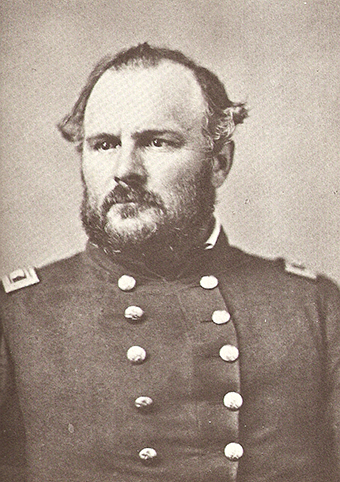
“Islam is from the Devil.” “Muslims are all evil.” “Ban them all.” “Kill them all.” Sorry, gentle reader, this atrocity did not take place in Syria or Iraq in 2017. It took place in southeastern Colorado Territory on November 29, 1864. The commander in question was John Milton Chivington (1821–1894), a Christian pastor. The victims identified as Infidels were Indians or Native Americans: two-thirds of them were women and children. The psychopathic rapists, mutilators, and murderers who committed these crimes were not Muslims. They were Christians. They were under the command of an ordained Methodist minister. They invoked the name of God. They acted in the name of Christ. They were what we Amerindians call wasichus or white devils.

Unlike white supremacists who demonize all non-whites, and unlike Christian supremacists who demonize all non-Christians, we indigenous people do not generalize. Those that generalize know nothing of our ways. We believe that all human beings, regardless of their race, are the children of the Creator. Some are righteous. Others are wicked. We judge people on the content of their character, not their color or creed. While some so-called followers of Christ are really followers of Anti-Christ, we distinguish between true Christians who are godly and false Christians who are demonic. If it is wrong for non-whites and non-Christians to view all whites and all Christians as devils, it is wrong for whites and Christians to view all Muslims as devils as well. And “Allah is the most just of judges” (95:08).

Dr. John Andrew Morrow is an Amerindian with Canadian and American citizenship. He received his PhD from the University of Toronto in the year 2000. He worked as an Assistant, Associate, and Full Professor of Foreign Languages for over a decade and a half at Park University, Northern State University, Eastern New Mexico University, the University of Virginia, and Ivy Tech Community College. He is the author of over thirty academic books in the fields of Hispanic, Islamic, and Indigenous Studies. A public figure and activist, he lectures all around the globe and acts as an advisor to world leaders. In recognition for his accomplishments, Dr. Morrow received an ISNA Interfaith Leadership Award in 2016. He may be followed on Twitter at @drjamorrow. His websites are www.johnandrewmorrow.com as well as www.covenantsoftheprophet.com. His videos can be viewed on The Covenants of the Prophet Channel on YouTube.

 BY: JOHN ANDREW MORROW   SOURCE: ISLAMICITY  AUG 22, 2017

When I received an abusive message from Elmer Argomedo, in which my faith and person were directly insulted, my first instinct was to insult him back according to the law of retaliation, namely, an eye for an eye. As the Quran states, “The retribution for an evil act is an evil one like it” (42:20). Fortunately, however, I remembered the words of the Prophet Muhammad who stated that “The strong are not the best wrestlers. Verily, those who are truly strong are those who control themselves when they are angry” (Bukhari and Muslim). Consequently, I calmed myself down, seeking the pleasure of the Creator who promised forgiveness and Paradise to “those who restrain their anger” (3:134).

Seeking to avoid an explosive expletive exchange that would prove unproductive, and determined to “Repel [evil] by that [deed] which is better” (41:34), I opted to follow the procedures and polices put in place by the US Armed Forces. In short, I filed a complaint for harassment hoping that the individual in question could be reasoned with by his superior officer. Feeling that there was a lesson to be learned from the incident in question, I shared my story with sister Hanan al-Harbi, a supporter of the Covenants Initiative, who has come to my defense in times of need.

The article, titled “Muslim Leader Was Harassed by a US Marine” was published in Mvslim on Sunday, July 23rd, 2017. No sooner had it been shared by thousands of readers, I was contacted by my friend and colleague, Qasim Rashid, who notified me that his brother, Tayyib Rashid, wanted to speak with me. Although I had never met him in person, I was well-aware of his identity. Known as “The Muslim Marine,” Tayyib Rashid rose to prominence for offering to guard Jewish cemeteries in the United States from hate-filled anti-Semites who sought to desecrate them.

Assalamo Alaikum Dr Morrow,

I’m writing as a mediator for Corporal Elmer Argomeda. After reading the article regarding the disturbing comment he left on your video I found him on Facebook and reached out to him to explain himself. Coincidentally, he is stationed at Cherry Point NC, same as my permanent duty station almost 20 years ago.

It turns out that he realizes that he is guilty of exercising poor judgment and asked me to make sure that you receive his apology below.

Message from Corporal Argomedo:

Good afternoon. First of all, I want to sincerely apologize regarding the comment I already deleted. I have nothing against Muslims people nor people in general who follow the Islamic religion. With that being said, I was talking about the radicals but I guess I should’ve be specific in that part. I hope you can understand and forget this. Have a wonderful day.

In any case I just wanted to try and make peace between a fellow Marine and a fellow Muslim. I hope you can find it in your heart to forgive him. Is so, please do let him know.

Jazakallah,
Wasalam,
Tayyib Rashid
TheMuslimMarine.com

Although the law of retribution provides for justice, the law of love calls of mercy: “pardon and overlook” (24:22). As we read in the Quran, “whoever pardons and makes reconciliation, his reward is [due] from Allah” (42:40). “If they incline to peace,” states Muslim Scripture, “then incline to it [also] and rely upon Allah.” And as the Prophet Muhammad counseled in the Covenants that he granted to Christian communities: “If a Christian were to commit an offense, Muslims must stand by his side, help him and support him… They should encourage reconciliation between him and the victim to either help or save him.” As one who submits and surrenders to the Creator, my only conceivable course of action is the statement: “We hear and we obey” (2:285)

As a Muslim and as an Aboriginal Person, I hold no grudges. There is no place for hatred in my heart. I have love for all. Consequently, I forgive Corporal Elmer Argomedo and have formally withdrawn my complaint of harassment that was submitted to the United States Marine Core. It takes courage for a man to say sorry to another man. Corporal Argomedo, however, did not hesitate to man up. For that I respect him. I also respect his desire to serve this great country which is based on profound principles. As for myself, I have only endeavored to adhere to the teachings of the Quran, which command: “Repel [evil] by that [deed] which is better; and thereupon the one whom between you and him is enmity [will become] as though he was a devoted friend” (41:34).

This is the second in a two-part series (you can find part one here) on the experiences of Dr. John Andrew Morrow (Imam Ilyas Islam) on his journey towards finding himself, his roots and becoming both Métis and Muslim. The Métis are people of mixed European and Indigenous ancestry, and one of the three recognized Aboriginal peoples in Canada; the use of the term Métis is complex and contentious and has different historical and contemporary meanings. For more, click here


One of the most moving moments in my life and one that drove me with greater determination to document my native ancestry was the Gathering of Nations in Albuquerque, New Mexico, that I attended in 2009. As the dancers entered the ring, as part of the Grand Entry, and the chanting, drumming, and circling commenced, I entered a trance, the most profound of spiritual states. Overwhelmed, in ecstasy, with tears uncontrolled flowing down my cheeks, I became at one with my people, and at one with the One, the Creator, the Provider, and the Great Spirit. I may have embraced Islam at the age of 16, finding spiritual similarity between Sufism (Tasawwuf/’Irfan), and the Right Path of Life found in Native American spiritual teachings; however, for me, the Grand Entry at the Gathering of Nations was comparable to making the pilgrimage to Mecca and circling the Holy Kaaba.

Although I have visited my spiritual forefathers, Idris I and Idris II, in Zerhoun and Fez, in Morocco, along with other saintly figures in South Africa, and have derived great benefit from performing pilgrimages to their holy sanctuaries, and while I would eagerly visit other sacred personalities in North Africa, the Middle East, and beyond, the Earth itself is a masjid, a mosque, a place of prayer, and a site of prostration.

“Some Muslims may travel to Arabia, Iraq, and Iran in search of spiritual satisfaction: I find mine here, on my land, the land of my ancestors.”

Although I have been offered employment in Saudi Arabia, the United Arab Emirates, Qatar, and Iran, I refuse to leave Turtle Island. I would rather perform tawaf or circumambulation with the Miami Nation, the Chippewa Nation, and the Métis Nation than performing it in Wahhabi-occupied Arabia where Islam merely exists in name. 

Although the essence of Islam remains pure, some of its teachings have been corrupted by Muslims. And while some North American Indians may have become corrupted, their teachings remain pure. There is more Islam in the Seven Grandfather Teachings than there is in the entire body of Salafi-Wahhabi-Takfiri literature. The Eastern Woodland Indians believe that that there is One God, the Great Spirit. They believe that the Great Spirit created the world in harmony and that we, human beings, are but a part of the whole. The Eastern Woodland Indians believe that the Great Spirit is Omnipresent in Creation. Consequently, all of creation must be respected. This is the religion of Muhammad. This is the religion of Jesus. This is the religion of Moses. This is the religion of Abraham. This is the religion of Adam. And this is the real religion of Allah, Islam, peace and submission. It is true tawhid or Divine Unity: The Creator is One and Creation is One. All at one with the One.

It was the will of God that I was brought from North Dakota, traditional Métis territory, to Indiana, traditional Métis territory. I spent two years conducting research at the Genealogy Center, at the Allen County Public Library, in Fort Wayne, the second largest institution of its kind in the United States. As an experienced academic and university professor, with decades of research experience, I painstakingly prepared the ancestral tree of my family, in all directions, going back over 500 years and, in some cases, even further back in history, with each link supported by birth, death, and marriage certificates, and supplemented by other historical documents, photographs, and paintings. Although many modern-day Métis and Indians trace their ancestry back to a single indigenous ancestor, I confirmed my descent from hundreds of aboriginal forefathers and foremothers.   

I vividly remember the moment in which I discovered a document confirming my descent from Roch Manitouabeouich, a scout and interpreter for the French, and his wife, Oueou Outchibahabanoukoueau. If these identifiably indigenous names were not enough, historical documents described them as “savages,” the French term that was used to contrast them from the “civilized” Europeans. Roch appears to have been Huron whereas Oueou appears to have been Abenaki. Their daughter, Marie Olivier Sylvestre Manitouabeouich is listed as being an Algonquin who lived with her father who was the Chief of the Hurons.

Not only was I a direct descendant of Manitouabeouich and Outchibahabanoukoueau through various family lines, I also confirmed that I was a direct descendant of Chief Membertou, the leader of the Mi’kmaq Nation, as well as Gisis “Jeanne” Bahmahmaadjimiwin, the wife of Jean-Nicolet de Belleborne, who belonged to the Nipissing Nation. These are only a few of the most prominent of my indigenous ancestors. There were hundreds more in an unbroken chain from the past to the present. Some of my French ancestors married Native women. Some of my French ancestors adopted Amerindian girls. Their mixed-blood descendants virtually always married other mixed-bloods. The fact that Métis typically married other Métis for centuries indicates that they shared a common Aboriginal culture. Although there are Métis with roots in a single region, my indigenous ancestry is varied and comes from Acadia, Québec, Ontario, and beyond. They were Huron-Wyandot, Mi’kmak, Abenaki, Penobscot, Algonquin, Innu, Abekani, and Nipissing. The ethnogenesis of the Métis or and Michif Otipemisiwak, did not take place in the prairies in the 19th century. It dates to the 17th century and took place throughout New France.

Like many Métis, my parents and grandparents did not speak openly about our indigenous ancestry. We were proud Francophone Canadians. We would canoe and kayak. We would harvest, trap, fish, and hunt. We passed down knowledge of medicinal herbs. We transmitted the songs and music of our ancestors. We were intimately connected with our environment. Our language was Métis. Our food was Métis. Our traditions were Métis. And our culture was Métis. We did not, however, openly identify as Métis. When I told my lifelong Jamaican-Canadian friend that I was indigenous, he could not comprehend why my family failed to tell me: “Your commitment to social justice and your solidarity with the oppressed has always been remarkable.”

Dr. John Andrew Morrow runs an educational YouTube channel on Islam. You can find a link at the end of the article.

Since the Métis have no specific phenotype and range from blue-eyed people with blond hair to tanned people with black hair, they can be racially ambiguous. Although some Métis moved onto reservations with their First Nation cousins, others continued to live with their French-Canadian cousins. Since it was bad enough being Francophone under English domination in Canada, professing to be Aboriginal was an added burden. Louis Riel, the revolutionary leader and martyr, who holds the same position to the Métis as Imam Husayn holds to Shiite Muslims, warned his people against being placed in reservations. Louis Riel wanted the Métis to maintain citizenship and the right to vote. As reservation Indians, the Métis would become wards of the State: their way of life would also suffer.

If my parents and grandparents did not openly speak about their Indigeneity, it was because the State literally came after our children. Inuit, First Nation, and Métis children were rounded up by the Canadian government and placed in residential schools to supposedly civilize, Anglicize and Christianize them. They were humiliated, degraded, physically abused, and sexually assaulted. The Aboriginal people of Canada still suffer from the scars that were inflicted upon them in residential schools. Our parents and grandparents did not assimilate to seek privilege. They were already second-hand citizens, subject to racism and discrimination as Francophones. They did what any sensible parent would do: they stressed their French-Canadian side as opposed to their Native Canadian side for the sake of survival. Call it strategic dissimulation. They lived as Métis people. They just did not use that dangerous word.

Since the documentary confirmation of my indigenous ancestry was an overwhelming experience, I was concerned as to how my father would react when I revealed to him the result of two years of genealogical research. My mother reassured me that I had nothing to be concerned about. After I presented the fact to my father, he smiled and said: “Son, you are right.”

The secret was just below the surface. All I had to do was scratch.

He had suspected it all along and, as my mother suggested, my paternal grandfather of Irish ancestry, was certainly aware of it. My grandmother, after all, was a Beaulieu, a family of noble French ancestry. In New France, the men from the Beaulieu line married indigenous women. Many of them lived in Québec but travelled throughout New France. Some had spouses in Eastern Canada and spouses in the Mid-West and prairies. Some settled in Manitoba, Saskatchewan, and North Dakota, among other places. Others reached the West coast of North America. 

When I presented my 5000-member circular genealogical chart to my mother, with all the Métis and First Nation ancestors highlighted in yellow, she was amazed at my work and accepting of my findings. Although they never described themselves as Métis, due to the dangers of racism and discrimination, she recognized that the Drouin and Bisson families were of mixed ancestry. When I presented my findings to my aunt, who looks stereotypically Indian, she acknowledged that we were indeed aboriginal people. Like a well that had been held back, and that suddenly burst, she started sharing information about her kokum or great grandmother, who was a big Indian woman and the head of her family clan. I reached out to another branch of the Drouin family in the Beauce and found that they openly identified as Métis. In fact, a relative of mine, François Beaulieu recently assumed the leadership of the Métis Nation of Québec. One cannot fake being Métis. All Métis descend from a small number of common ancestors. They are all interrelated and interconnected. Métis families are famous for keeping meticulously detailed genealogical trees. We have all found each other and in so doing we have all found ourselves. My family, which lives in Québec, Ontario, and Indiana, all fly the Métis flag with pride. In fact, my father, who is nearly eighty, insists upon it: “Son,” he said, repeating words he told me when I was but a boy, “Be proud of who you are.” I say the same to my sons who are being raised openly and proudly as indigenous inhabitants of Turtle Island. We are proud to be Métis and we are proud to be Muslim.

by Dr John Andrew Morrow

Click here to read Part 1 in this series.


Dr John Andrew Morrow (Imam Ilyas Islam) is an Amerindian with Canadian and American citizenship. He received his PhD from the University of Toronto in the year 2000. He worked as an Assistant, Associate, and Full Professor of Foreign Languages for over a decade and a half at Park University, Northern State University, Eastern New Mexico University, the University of Virginia, and Ivy Tech Community College. He is the author of over thirty academic books in the fields of Hispanic, Islamic, and Indigenous Studies, including the critically-acclaimed Covenants of the Prophet Muhammad with the Christians of the World. A public figure and activist, he lectures all around the globe and acts as an advisor to world leaders. In recognition of his accomplishments, Dr Morrow received an ISNA Interfaith Achievement Award in 2016.

AUGUST 21ST, 2017 6:47 AM

Meet Haneen Alsafi, recipient of a humanitarian award from the Ahmadiyya Muslim Community USA and quite an inspiration.

Raised in al-Hillah, in Babil, Iraq, she is the daughter of an Arab Shia father who grew up in Baghdad and a Turkmen Sunni mother who grew up in Erbil. As Alsafi explains in an interview, although they belonged to different ethnic and religious groups, “My parents never disagreed with each other’s sects or beliefs, just like the others, we all shared one country and lived in peace.”

She grew up in a small, very conservative city, but Alsafi also spent enough time in Erbil, a city of over 1.5 million people, to develop a connection. There, she was exposed to an ethnically diverse population consisting of Kurds, Assyrians, Arabs, Armenians, Turcomans, Yezidis, Shabakis and Mandeans, and a religiously rich community with believers in Sunni, Sufi and Shia Islam, as well as Christianity, Yezidism, Yarsan, Shabakism and Mandeanism. Her experience in Erbil was eye-opening.

My family would take us every year to visit my mother’s family in Erbil. I was exposed to a diverse population. Although the culture was very similar, the traditions and the languages were different. I think this exposure definitely prepared me to become the person I am today and played a major role in my path and passion in life. We have Kurdish, Turkmen and Christian friends in the north of Iraq. We still maintain friendship with them. It never was an issue for people from different religions and/or ethnicities to become friends.

Like most Iraqis, the people of Hillah were not spared the ravages of war, death and destruction. The city was the scene of heavy fighting during the 2003 U.S. invasion of Iraq. Although the city was relatively peaceful after the initial invasion, it soon became the scene of numerous terrorist attacks.

Hillah was targeted by terrorist groups through a series of car bombs and suicide bombers. I lost one of my dearest friends in a car bomb in 2006 at the graduation party for the engineering college graduates. Many other bombings followed: in the local market, at the police academy graduation ceremony and at the retirement center. Hundreds of people were killed each time since, as you can imagine, those attacks targeted huge groups of people. We have been close to bombings but luckily not too close to get injured.

Seeking greater safety, Alsafi’s family relocated to Erbil, where she would find peace, for a time. The product of a multilingual environment, Alsafi grew up speaking Arabic as her dominant language, Turkic as a second language, and acquired some knowledge of Kurdish, which she learned through her mother. English, however, was her calling.

I started my English Literature major at Babylon University. Then I transferred to Salah Aldeen University during my last year of college and graduated from Erbil. The reason I chose English Literature is because I wanted to learn to speak English fluently. After the first year in college, I discovered that formal instruction was not the way to learn to speak the language, so I started watching American TV shows without the translation in subtitles. One of my favorite shows was ScrubsFriends and Grey’s Anatomy. I also listened to a lot of Backstreet Boys, Blue and other music which also helped me understand the slang language. In 2004, I decided to major in English and wanted to learn it because I wanted to work with the Americans in Iraq to help rebuild the country.

Iraq had been invaded or liberated by the Americans, depending on one’s personal political opinion. The only options available to Alsafi, however, were to contribute to a civil war in action or try to pick up the pieces. Consequently, she decided to help rebuild her country.

My first job in 2008 was with the U.S. State Department’s Regional Embassy Office in Babil (REO), where I worked as a consultant and interpreter, assisted both the local government and the private sector to rebuild Iraq into a better place. The U.S. government had invested massive amounts of dollars in projects to assist Iraqis in upgrading their lifestyle; they helped build hospitals, schools, roads and assisted many small business entrepreneurs in starting their businesses and contributing to the economy. We also worked on many educational projects such as opening a TOEFL center and providing books and supplies to schools.

An intelligent, socially committed and patriotic young woman, Alsafi was not naïve when it came to the risks involved in helping to rebuild her country and the dangers posed by religious demagogues and political opportunists.

It was not an easy decision to make when it came to “working with the Americans,” as they say. It was socially difficult to reveal as most people would either consider me a traitor or just a corrupt woman who “wanted to be with Americans.” Although I didn’t care too much about what such people thought, I realized that working at the REO placed myself and my family in danger. In fact, many locals who worked for the [U.S. Department of State] or [U.S. Department of Defense] were kidnapped and eventually killed by militias in Iraq, mostly claiming to be religious groups. I started getting threatening text messages saying: “You betrayed the country; we will cut off your head.” I did not know who was texting me but I felt like it could be the beginning of something nasty. I applied for the Special Immigrant Visa … in the hope of leaving the country. My application was approved and I was ready to leave. It was very sad to leave my family and friends behind, but I had to do this at the time.

Like most refugees and immigrants, Alsafi was overwhelmed when she arrived in America. As an educated working woman in Iraq, she seemed set for success. After all, she was the public diplomacy coordinator for the U.S. State Department/U.S. Regional Embassy in Iraq for nearly three years. However, in the U.S., she faced all sorts of challenges and obstacles.

I arrived in Dallas/Fort Worth in June 2010 and lived in North Richland Hills for nine months. There I suffered from cultural shock and learned first-hand how difficult it was to find a job when you are fresh in the country. I worked many jobs, including Pizza Hut, Apple Refurbishment and a local insurance agency. I also volunteered at North Richland Hills Hospital and Catholic Charities. I decided to move to North Carolina to be close to my sister who lived in Raleigh at the time. I started volunteering with Lutheran Services Carolinas to help refugees and applied for a job as a case manager. 

In the years that followed, Alsafi would rise in the ranks from case manager to education coordinator, and eventually to resettlement director/area manager for Lutheran Services Carolinas. It was due to her commitment to serving refugees that she received the Ahmadiyya Humanitarian Award at the 69th Annual Conference of the Ahmadiyya Muslim Community USA that was held in Harrisburg, Pennsylvania, on July 15.

Established in 2011, the Ahmadiyya Muslim Humanitarian Award recognizes the contributions and services of individuals who selflessly strive to serve oppressed and disadvantaged communities around the world. By giving a voice to the voiceless, these individuals honor fundamental and universal human rights guaranteed by the Quran and the Universal Declaration of Human Rights.

Alsafi joins the illustrious ranks of previous recipients, including: Bill Ayres, co-founder of Why Hunger?; Katrina Lantos Swett and Robert George, former chairs of the U.S. Commission on International Religious Freedom; Veerawit Tianchainan, executive director of the Thai Committee for Refugees Foundation; and Dr. Milton Boniuk of the Boniuk Institute for Religious Tolerance at Rice University.

Alsafi is universal in her world view

I respect all religions and faiths. I believe that religions are one way to set rules and teach discipline in people.

Who is Haneen?

I like to help people.

Although Alsafi does not fit the stereotypical image of a religious person and does not actively practice any faith, she is an inspiring woman with a heart of gold. Imam Ja‘far al-Sadiq — the 8th-century religious scholar respected by Sunnis, Shias and Sufis — once said, “Do not judge a person on how much they pray and how much they fast, judge them on how they treat other human beings.”

If this is the criteria for goodness, holiness and real religiosity, then Alsafi is a person to be held in high esteem. The Quran states that humans were created to serve, to be the custodians and caretakers of creation. It is incomprehensible why someone who serves the oppressed and disadvantaged would be threatened with beheading. Her wisdom, care and compassion is inspired by solidarity, service and a desire to care for others.

The situation in Erbil has changed since the U.S. invasion and occupation of Iraq, particularly with the rise of ISIS.

Erbil has been protected by the Kurdish Peshmerga, the Kurdish military, since the 1980s when Kurdistan claimed independence from the rest of Iraq that was ruled by Saddam. So, Kurdistan did not see much violence compared to the other parts of Iraq. 

ISIS has actually made the Iraqis stronger and more united. The Peshmerga were fighting ISIS from the north and have done [a] great job in protecting [the] Kurdistan region from the ISIS invasion. From the south and mid of Iraq, the people of Iraq got together and formed what they call al-Hashd al-Sha‘abi, the People’s Mobilization Force. They also well liberated many parts of Iraq from ISIS.

Erbil has seen great development in the past 10 years on many levels, especially economically and socially. Many people who left between the 1980s and the year 2000 came back and invested in small businesses. Many Arabs from all over the country found peace and made a living in Erbil. Americans, Europeans and many other nationalities found employment in Erbil and they do live peacefully there.

Erbil also hosts thousands of refugees from Syria, as well as Yazidis and other victims of ISIS from Iraq. Those refugees live in a refugee camp in tents. They receive support and donations from the local government, UNHCR, and the many good people that want to help. Small local nonprofits are now assisting those refugees to resettle back in their cities, towns and villages that were occupied by ISIS and were recently liberated.

In short, rather than contribute to divisions and distrust in the community, ISIS has actually drawn people closer together, Alsafi says. She provides an honest analysis for the greatest challenges facing Iraq and some possible solutions.

One of the many challenges facing Iraq right now is the lack of leadership and the high level of government corruption. The majority of government officials, who are supposed to be the leaders of the country, are all in power for one reason and one reason only: to make as much money as possible. They have no skills and no knowledge. It is so unfortunate that the country is being led by unfit and unqualified individuals. It is also very contradictory and ironic that Iraq was once the bastion of civilization.

There was a time when Iraq produced the best scientists, doctors and scholars in the world. Throughout history, the people of Iraq were among the most educated and well-read. Iraqis have suffered through a series of wars, violence, dictatorship and separation from the rest of the world during Saddam’s regime. When we consider its recent history, it is not strange or surprising that Iraq has yet to find stability. I am really not sure what the solutions are to this mess but perhaps it could start by getting rid of the corrupt individuals who do not add value to the country.

As a service provider, Alsafi shares experiential knowledge on the impact the Trump administration’s policies have on refugees.

The executive orders that put a ban on refugees traveling from certain countries has definitely impacted the population we serve. We usually receive a high number of arrivals each summer. This summer, we received less than a handful of refugees. The ban has been extended until October with few exceptions made. During the ban, LSC as well as many other agencies had to lay off staff in programs due to funding cuts. We hope that things will be better after the ban is over. The resettlement agencies across the U.S. will continue to advocate for refugees and raise awareness within the communities.

Alsafi refutes ill-founded assertions — that refugees are a threat to Western civilization and values, for example — with facts and success stories.

Refugees are definitely not a threat to the Western civilization; they are carefully vetted for a minimum of two years prior to being allowed to travel to the U.S. Refugees add great value to the U.S. economy because they are extremely hard workers who are dedicated to learning about their new country and adapting to its culture.

Through the assistance of refugee resettlement agencies across the nation, refugees reach self-sufficiency within six to eight months after arrival to the U.S. through employment opportunities, at which point they get off government assistance. Employers value refugees due to the skills and the hard work they bring to their business. Almost every family and individual refugee resettled is a success story. I want to offer myself as an example of a success story. We also have many [Special Immigrant Visa] clients from Afghanistan and Iraq who arrived and immediately added value to the economy by finding early employment.

 As for those who want to block the entry of refugees and immigrants, I encourage them to learn about the history of the USA, learn about how and why their ancestors made it to this country, and learn about their struggles and the reasons for leaving their home counties back then. America was built, and is built, by refugees and immigrants. There is strong evidence that this population can succeed and make it through challenges.

Far from being disloyal, Alsafi, a refugee herself, has truly embraced America and all that it offers.

The thing that I appreciate the most about the U.S. is that it has a system for everything. Although it might not be effective all the time, it helps to have a system in place. I also appreciate the Bill of Rights that gives us the right to justice.

Despite her love for the U.S., and the fact that she was recently granted citizenship, part of Alsafi’s heart will always remain in her homeland. When asked if she sees herself ever returning to Iraq, a certain nostalgia comes to the surface. “I will one day go back and live in Iraq,” she explains. “If I do so, it will be in Erbil.”

If she does, I think, it will be a gain for Iraq and a loss for America.

*Image: Haneen Alsafi at the annual Muslim Television Ahmadiyya event. >Photo via MTA